Insight, company news, and educational resources about AI governance.
AI Governance Insights, Straight To Your Inbox
Get the latest research, product updates, and governance frameworks from the Trustible team.
The FS AI RMF is an industry-led framework for managing AI risk in financial institutions. Released by the U.S. Treasury
ISO 42001 certification is an accredited third party’s confirmation that your AI management system (AIMS) meets ISO/IEC 42001, verified through
Most AI harms don’t come from bugs. A hiring model trained on years of biased resumes isn’t malfunctioning; it’s reproducing
The EU AI Act’s transparency obligations come into effect on August 2, 2026. If you build or deploy AI systems
Arlington, VA, July 22, 2026 — Trustible, the purpose-built AI governance platform for regulated enterprises, today announced it has been
Your team documents human oversight for an AI system to satisfy the EU AI Act. Six months later, the governance
There is no federal law specifically governing AI chatbots, however, the states are not waiting. 13 have enacted chatbot regulations
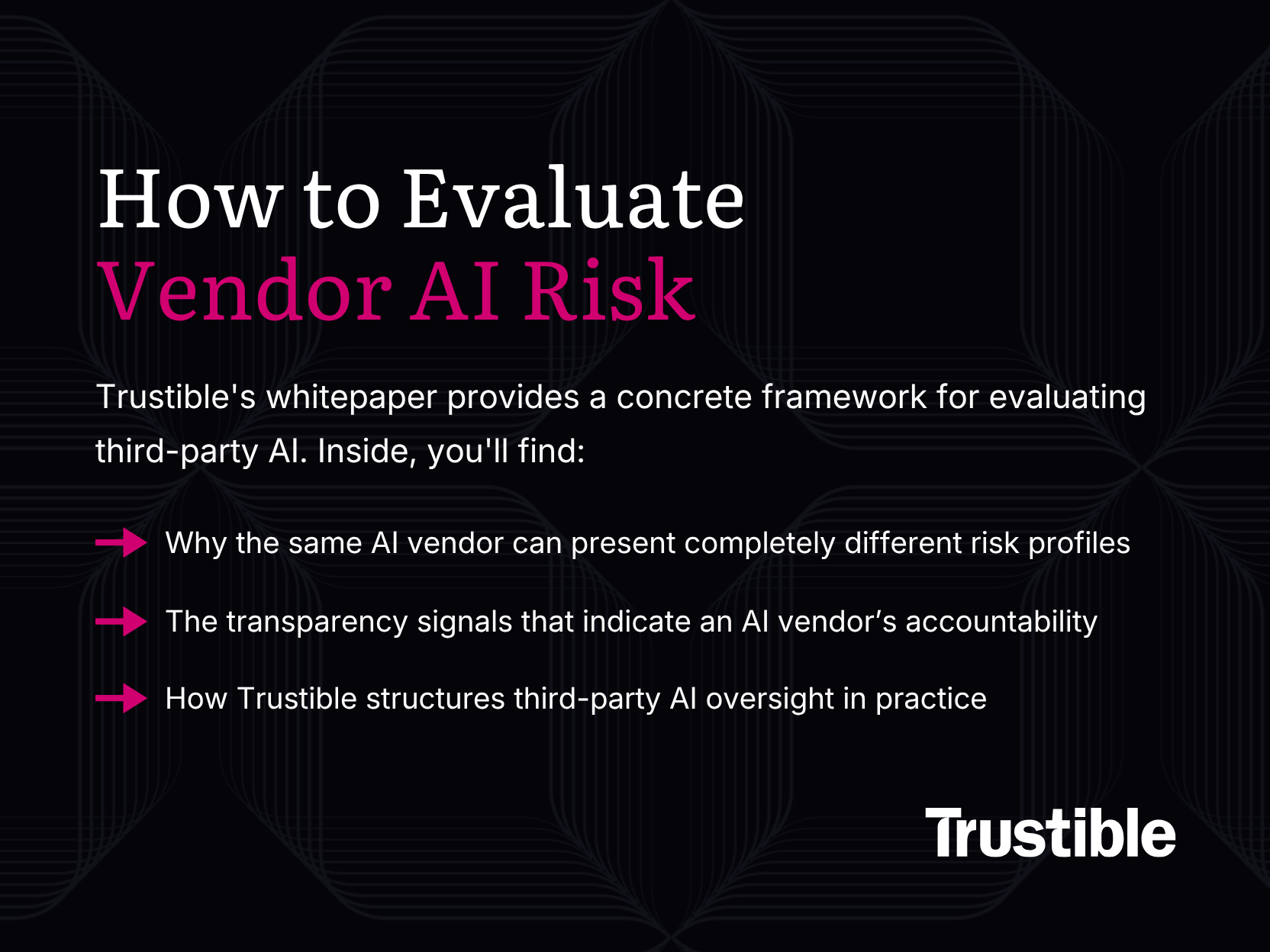
Vendor AI risk is a fast-growing blind spot in the enterprise AI portfolio. 70% of organizations are still building out
Models are the heart of an AI system and the source of many risks. With many developers now choosing to
See how Trustible helps governance teams approve more AI, faster.