


Recap from Trustible’s Panel at IAPP AI Governance Global North America 2025
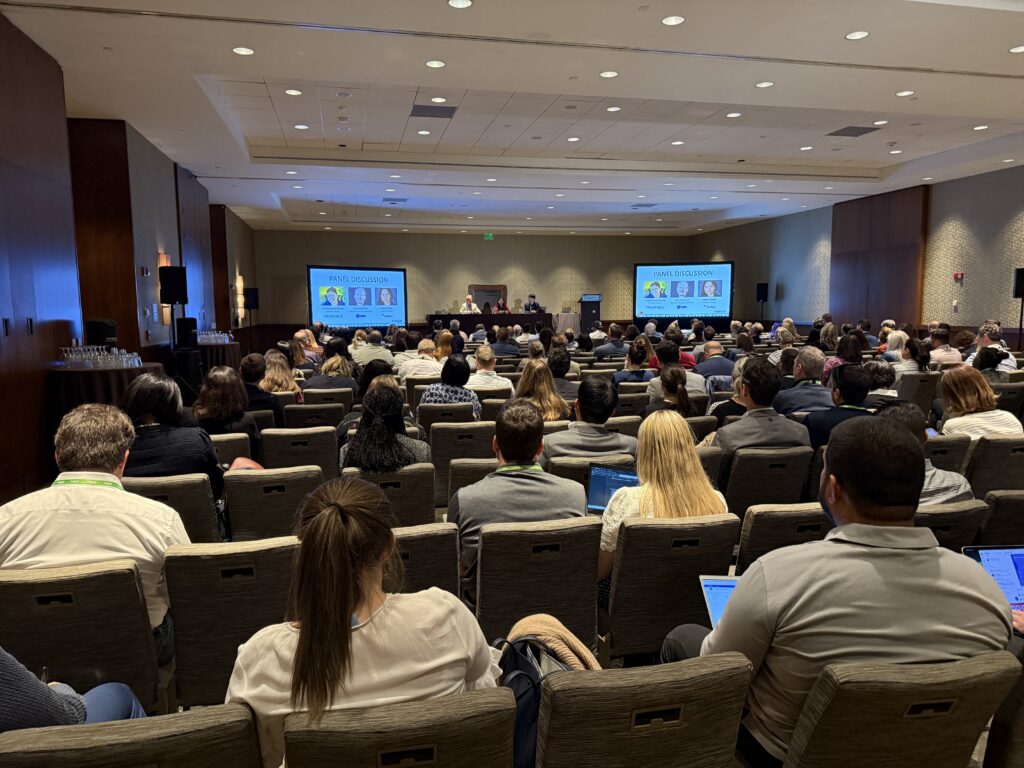
Last week at the IAPP AI Governance Global North America conference in Boston, Trustible brought together AI governance leaders from Leidos and Nuix to explore a deceptively tactical but mission-critical question: What does the “perfect” AI intake process look like?
The lively session, moderated by Andrew Gamino-Cheong (CTO & Co-Founder of Trustible), unpacked the front door to AI governance—how organizations capture and review every AI use case, tool, or feature under consideration. Without a reliable intake process, organizations risk missing critical visibility into their AI landscape, undermining governance before it even begins.
But the plot twist? There’s no such thing as the perfect AI intake process—the only perfect process is the one that works best for the nuances and unique needs of your organization.
What Is an AI Use Case Intake Process?
An AI use case intake process is a structured method for capturing, evaluating, and routing proposed AI projects before development begins. Rather than letting teams spin up pilots ad hoc, an intake process creates a defined entry point: every AI idea goes through the same set of questions, gets assessed against consistent criteria, and gets directed to the right stakeholders before a single line of code is written.
Without this structure, organizations face a familiar set of problems. AI adoption accelerates faster than oversight can keep pace. Duplicate tools proliferate. Risk assessments happen inconsistently — or not at all. Teams invest in projects that conflict with regulatory requirements or internal policy.
A well-designed intake process solves for all of this. It gives organizations consistent risk assessment across every proposed use case, cross-functional visibility into what is being built and by whom, and a defensible record of how decisions were made — a requirement under frameworks like the EU AI Act and emerging U.S. state regulations.
The goal is not to slow AI down. It is to make sure the AI your organization deploys is the right AI, built the right way, with the right oversight in place from the start. Organizations looking to accelerate AI intake are finding that a well-structured process actually speeds up responsible deployment rather than hindering it.
The Six Tradeoffs Every Intake Process Must Navigate
Building an effective AI use case framework means making deliberate choices about how it will operate. There is no universal template. As Trustible advisor Gamino-Cheong put it: “There’s no ‘perfect’ intake process. Only the one that’s right-sized for your organization’s size, role, and risk profile.”
Every organization designing an intake process will encounter six core tradeoffs:
- Granularity. How detailed should submissions be? More detail gives reviewers better signal, but heavy forms create friction and discourage participation. Start with the minimum information needed to make a triage decision, and add depth only where risk warrants it.
- Heaviness. How rigorous should the review process be? A process that is too light misses real risks; one that is too heavy stalls legitimate work. Calibrate the review depth to the risk level of the use case, not to a single standard applied universally.
- Outcomes. What does a successful intake look like — approval, rejection, or conditional advancement? Define the possible outcomes upfront and make sure submitters understand what each one means for their project timeline.
- Participation. Who submits use cases, and who reviews them? Broad participation generates more coverage; narrow participation enables tighter control. The right answer depends on your organizational structure and how AI decision-making authority is distributed.
- Implementation. Will the intake process live in a spreadsheet, a shared form, or a dedicated platform? Early-stage programs often start with lightweight tools. As volume grows, the manual burden compounds: inconsistent reviews, no audit trail, no way to route by risk level automatically. Trustible’s Automated Workflows replace that patchwork with structured intake, role-based routing, and a defensible record of every decision, without requiring a lengthy implementation project to get started.
- Timeliness. How fast should the process move? Speed matters to business teams. Set clear SLAs for each review stage so submitters know what to expect and reviewers have accountability.
Getting these tradeoffs right requires honest self-assessment about where your organization is today — not where you plan to be in two years. Build for your current reality, then iterate.
The Core Stages of an AI Use Case Intake Workflow
A repeatable intake workflow gives every proposed AI project the same structured path from idea to decision. Strong AI use case prioritization depends on having clear stages, defined owners, and realistic timelines at each step.
Most mature intake workflows include six stages:
- Submission. A business team, technical team, or individual contributor submits a use case through a standardized form or platform. This captures the core details needed for initial review. Typical timeline: same day.
- Initial Triage. A governance team or designated reviewer does a quick scan to assess completeness and assign a preliminary risk tier. Low-risk submissions may advance quickly; high-risk or incomplete ones are flagged for deeper review or returned for additional information. Typical timeline: 1–3 business days.
- Risk and Value Evaluation. The use case is assessed against defined criteria covering business value, risk level, technical feasibility, and governance readiness. Cross-functional reviewers — legal, privacy, security, and business stakeholders — weigh in based on the risk tier assigned at triage. Typical timeline: 3–10 business days depending on complexity.
- Approval or Rejection. A decision is issued with documented rationale. Approved use cases advance with any required conditions attached. Rejected use cases receive clear reasoning and, where applicable, guidance on resubmission. Typical timeline: 1–2 business days after evaluation.
- Onboarding to Development. Approved use cases are handed off with documented governance requirements — data handling obligations, model documentation expectations, monitoring thresholds — built into the project brief from day one. Typical timeline: varies by project scope.
- Ongoing Monitoring. Use cases in production are tracked against their original approval conditions. Material changes trigger a re-review. This stage is often the most underdeveloped in early-stage programs and the most important for long-term compliance. For a deeper look at what effective post-deployment oversight requires, see our guide on AI monitoring.
One structural decision shapes how all of these stages operate: whether intake is centralized or distributed.
Centralized vs. Distributed Intake Models
In a centralized model, all AI use case submissions flow through a single governance function — typically an AI governance team, a Center of Excellence, or a risk committee. This model delivers consistency, a unified audit trail, and clear ownership. It is easier to enforce standards and identify duplicates. The tradeoff is speed: centralized review can become a bottleneck as submission volume grows.
In a distributed model, intake and initial review responsibilities are delegated to business units or functional teams, with the central governance function setting standards and handling escalations. This model moves faster and tends to generate stronger buy-in from the teams doing the submitting. The tradeoff is consistency: without tight standards and tooling, quality varies across units.
Many organizations start centralized to establish standards, then move toward a hybrid model as governance matures and business units build internal capability. The right starting point depends on your current governance capacity and how broadly AI adoption is already spread across the organization.
What Should an AI Use Case Intake Form Include?
The intake form is the entry point to your entire process. Keep it focused. A form that takes 45 minutes to complete will be avoided. Design it around four categories:
- Use Case Basics. What is the proposed application? What problem does it solve? Which team or business unit is proposing it? What AI system or vendor is involved (if known)?
- Risk Signals. Does the use case involve personal data, sensitive categories, or regulated information? Does it affect consequential decisions about individuals — hiring, lending, healthcare, access to services? Is it customer-facing or internal? What jurisdiction does it operate in?
- Business Value. What is the expected business outcome? What metrics will define success? What is the estimated investment in time, budget, or resources?
- Stakeholder Information. Who is the business owner? Who is the technical lead? Which legal, privacy, or compliance contacts are already engaged?
This is a starting-point checklist, not a final template. Add fields where your organization has specific regulatory obligations — sector-specific requirements, internal policies, or audit standards. Remove fields that do not drive decisions. Every field on the form should map to a question the reviewer actually needs answered.
How to Evaluate and Score AI Use Cases
Once a use case is submitted, evaluation should be consistent and defensible. Strong AI use case prioritization frameworks assess proposals across four dimensions:
- Business value. What is the expected impact — cost reduction, revenue generation, risk mitigation, productivity gain? How confident is the estimate, and over what timeframe?
- Risk level. What is the potential for harm — to individuals, to the organization, to third parties? Risk is often best treated as a gate rather than a scored dimension: use cases above a defined risk threshold require additional review regardless of their value score.
- Feasibility. Does the organization have the data, technical capability, and resourcing to build and operate this use case responsibly?
- Governance readiness. Are the right policies, controls, and monitoring capabilities in place to support this use case in production? If not, can they be established as a condition of approval?
Scoring models vary. Some teams use a simple weighted matrix; others use qualitative tiers. The mechanics matter less than the consistency. Pairing scoring with structured risk and impact assessments gives reviewers a common framework. What you want is a process where two reviewers evaluating the same use case arrive at the same decision — and where that decision can be explained to an auditor or regulator if required.
Trustible’s risk scoring engine does this automatically. Each intake response maps to risk attributes that feed a rules-based engine, scoring use cases across categories like data sensitivity, affected populations, third-party dependencies, and regulatory exposure. Reviewers see an automated inherent risk score with the rationale behind it, calibrate it where judgment requires, and the record is maintained throughout.
Practitioner Journeys: From Messy Starts to Scalable Systems
Most organizations do not start with a polished intake process. They start with whatever is available — a shared spreadsheet, an email thread, a PowerPoint deck — and build toward something more structured as the stakes become clear. The practitioners below represent that maturity arc: both started distributed and informal, and both moved toward more centralized, systematic approaches as AI adoption accelerated inside their organizations.
Sophia Toomey, Program Manager, Leidos
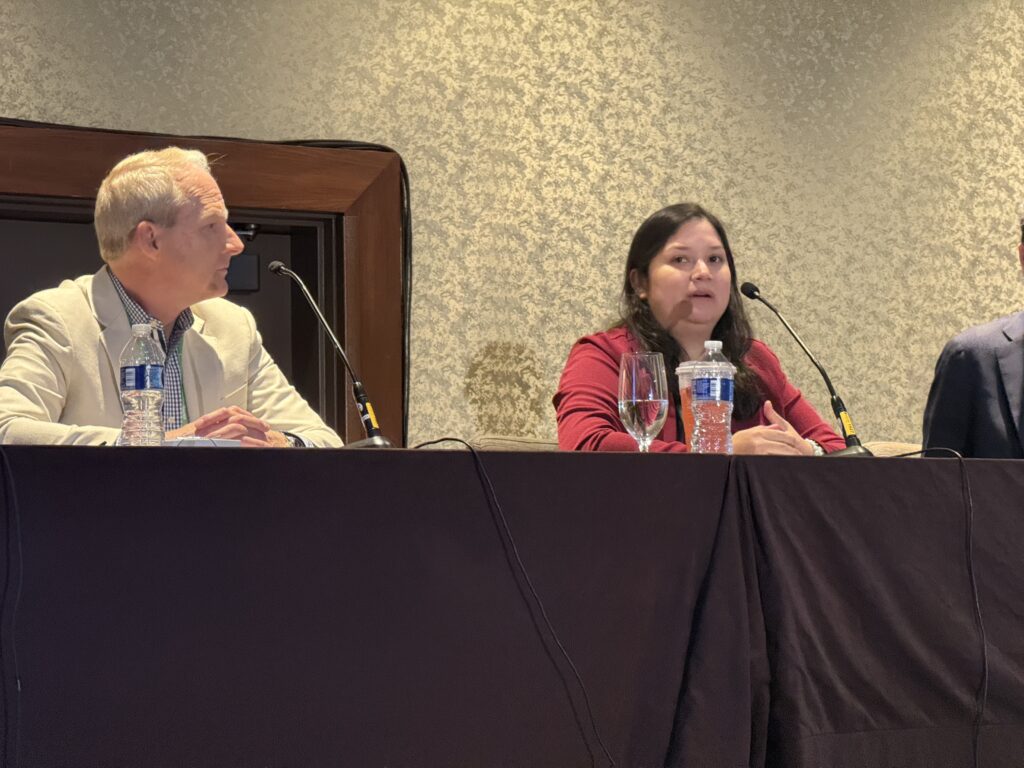
With over 50,000 employees, Leidos faced an avalanche of AI tools and pilots. Toomey candidly described starting with messy spreadsheets and PowerPoints before moving toward a company-wide intake process. Her key lessons: simplify questions, meet contributors where they are, and position governance as risk reduction — not auditing.
“Give yourself grace if you’re still in Excel and PowerPoint,” she advised. “It’s trial and error — you’ll grow from there.” Leidos later compressed the initial AI governance intake process from weeks to hours using a purpose-built platform.
Chris Stevenson, Head of AI Strategy & Operations, Nuix
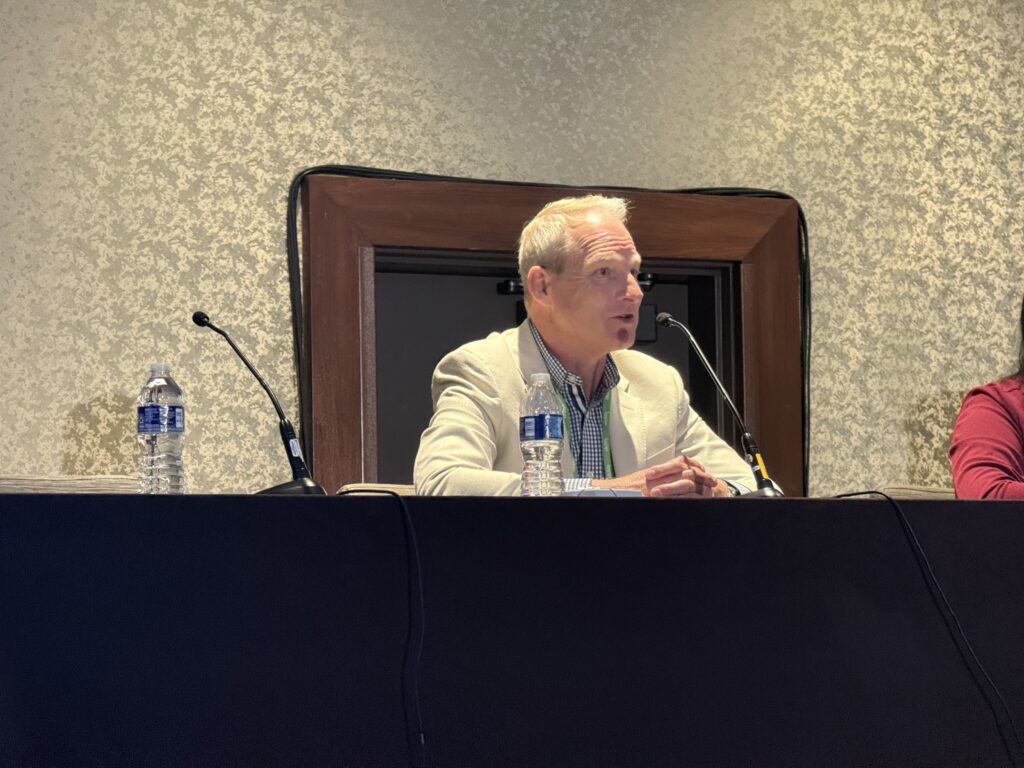
At Nuix, Stevenson admitted he wasn’t “a process person” by nature. But the stakes — supporting regulators and investigators — demanded rigor. His first attempts with shared Word docs collapsed under the pace of AI adoption. The breakthrough came by partnering early with legal and privacy leaders, and later, by automating consistency through Trustible’s platform.
“AI governance demanded it. Partnering with legal was the game-changer,” he said. Nuix has since made AI governance an operational reality across its organization.
Common Pitfalls and Culture Shifts
Even well-designed intake processes fail when the cultural conditions are not right. The most common obstacles are not technical — they are organizational. Addressing them requires deliberate effort on three fronts, and treating AI governance process improvements as ongoing rather than one-time.
- Education and Buy-In. Teams that do not understand why governance exists will route around it. Stevenson’s experience is instructive: “Don’t underestimate how fast AI will creep in and overwhelm ad hoc systems.” Governance teams need to invest time in explaining the purpose of intake — not just announcing that it exists. Regular communication, onboarding sessions for new teams, and visible examples of governance preventing real harm all help build the case.
- Cross-Functional Teams. Legal, privacy, security, and business stakeholders each see different dimensions of risk. Keeping governance siloed in one function means missing signals that other teams would catch. Toomey’s approach at Leidos — meeting contributors where they are — reflects a broader principle: governance works better when it is built with the people who will use it, not handed down to them. Identify champions in each function early and give them a defined role in the intake process.
- Reframing Governance. The word “governance” carries baggage. To many business teams, it signals bureaucracy, delay, and control. Both Stevenson and Toomey found that reframing governance as risk reduction — rather than oversight or auditing — changed how their teams engaged with the process. The intake process is not a checkpoint designed to slow things down. It is the mechanism that lets the organization say yes confidently, with documentation to back it up.
From the Field: Lessons from Trustible’s IAPP Panel
The practitioner insights in this article were gathered at the IAPP AI Governance Global North America conference, where Trustible hosted a panel on building effective AI intake processes. IAPP AI Governance Global is one of the leading gatherings for privacy, security, and AI governance professionals — a setting where practitioners share what is actually working, not what looks good in a framework document.
The panel surfaced a consistent theme: organizations that invest early in structured intake processes — even imperfect ones — are significantly better positioned to scale governance as AI adoption grows. The ones that wait for the perfect system rarely build one in time.
Key Takeaways for Organizations
If you are building or refining an AI use case intake process, keep these principles in mind:
- Start structured, not perfect. A basic intake form that gets used consistently beats a sophisticated process that exists only on paper. As Toomey put it, give yourself grace if you are starting in Excel.
- Right-size the process to your risk profile. Not every use case needs the same depth of review. Build tiered pathways so high-risk submissions get the scrutiny they require without slowing down low-risk ones.
- Treat risk as a gate. Use cases above a defined risk threshold should require additional review regardless of their business value score, as outlined in the evaluation framework above.
- Build cross-functional ownership early. Legal, privacy, and security should be embedded in the intake process — not consulted after decisions are made. Stevenson’s partnership with legal was the turning point at Nuix.
- Plan for monitoring, not just approval. Approving a use case is not the end of governance. Build ongoing monitoring into every approved project from day one, as described in the core workflow stages.
- Don’t wait for adoption to force your hand. As Stevenson warned: “Don’t underestimate how fast AI will creep in and overwhelm ad hoc systems.” The time to build intake infrastructure is before the volume of AI projects exceeds your capacity to manage them informally.
FAQ
An AI use case is a specific, scoped application of AI technology to a defined business problem. It identifies what the AI system will do, what data it will use, who it will affect, and what outcome it is designed to produce. A use case is distinct from an AI tool or vendor: the same tool may support multiple use cases, each with its own risk profile and governance requirements.
Effective AI use case prioritization weighs three factors: business value (expected impact and confidence in the estimate), risk level (potential for harm to individuals, the organization, or third parties), and feasibility (availability of data, technical capability, and resourcing). Risk is typically treated as a gate rather than a scored dimension — high-risk use cases require deeper review before advancing, regardless of their value score.
A well-designed intake form covers four categories: Use Case Basics (what the AI will do and who is proposing it), Risk Signals (data types involved, affected populations, regulatory context), Business Value (expected outcomes and success metrics), and Stakeholder Information (business owner, technical lead, legal and privacy contacts). Keep the form focused on the information reviewers actually need to make a triage decision — every field should drive a specific review question.
Evaluation should assess four dimensions: business value, risk level, technical feasibility, and governance readiness. The specific scoring model — weighted matrix, qualitative tiers, or a hybrid — matters less than consistency. At organizations like Leidos, the goal is that two reviewers evaluating the same submission reach the same decision, and that decision can be documented and explained to an auditor. Governance readiness, in particular, should be assessed as a condition of approval: if the right controls are not in place, they can often be built into the project as a requirement before launch.
How Trustible Supports AI Use Case Intake
The intake challenges described in this post, inconsistent reviews, no audit trail, risk triage that depends on who happens to review a submission, are exactly what Trustible’s Automated Workflows are built to solve.
Intake in Trustible runs through three structured sections: contributors submit use case details and business context, reviewers assess risk and benefits with embedded intelligence to guide their judgment, and approvers make and document the final decision. Each section has defined ownership. Each step is logged. The result is a governance record that builds itself through normal operations, not one assembled before an audit.
Low-risk use cases are automatically identified for streamlined review. Higher-risk ones trigger deeper assessments, with Trustible’s Risk Management module generating specific risk recommendations and mitigation guidance from a continuously updated taxonomy, rather than leaving reviewers to assess from scratch. Every approved use case lands in AI Inventory as a structured record with ownership, status, and governance history tracked going forward.
Governance teams that replace manual intake with Trustible’s structured workflows don’t just move faster. They get a process that scales with AI adoption rather than falling behind it. If you want to see how it works in practice, Download the Slides from our IAPP panel or Get In Touch to talk through your specific situation.